Showing posts with label escape from the city of angeles. Show all posts

Wednesday, April 16, 2025

Ithaka "Escape From The City Of Angeles" ft. Marta Dias (Replacement Killers Soundtrack)


https://www.youtube.com/watch?v=Y21UrdTi2kI


* Ithaka "Escape From The City of Angels) featuring Marta Dias * Recorded at Namouche Studios - Lisbon, Portugal 1995 * Produced by: Joe Fossard -* Pre-production and samples by: Grizly * Bass: Francisco Rebelo * Trumpet: Nuno Reis -* Tenor Sax: Paulo Muiños * Lyrics: ©1995 Ithaka Darin Pappas (Ravenshark Music/ASCAP/North Music Group) People they ask me, Why the hell you wanna leave? Saying that they’ll miss me, that they’re gonna grieve This town is number one, we got the Lakers and the sun There’s always lots of lovelies, always lots of fun Why won’t you settle down and stay? Who in their right mind would ever leave LA? But I gotta tell you, got to put it straight Still’ve busted out of there busted down the gate Cuz, I had to get out while there was going to get LA was the hunter, California was the net So I got up, got off of my bucket Sometimes you gotta say, Well what the hell.? fck it! Wasn’t around for the riots of the King But every other night bullets left my ears to ring Hostility, the song that L.A. played Every single night and every single day Walking down the alley, the one behind my house Came five slang-bangers, it was me they were to roust They asked me, Where ya going?, said, Not really sure The next thirty-seconds I remembered in a blur 3x WANT TO GET OUT. HAD TO GET OUT. GOT OUT ESCAPE FROM THE CITY OF ANGELS I tried so hard for years to understand Why do you find such pleasure in killing another man? I prefer the simple highs in life Like a mountain of water, not cuttin’ with a knife But where I’ve disappeared ain’t confidential The sky’s still blue, the swells are monumental And no, I’m not ignoring my heritage Over the gap, I’m a building a bridge To learn once and for all that peace can exist Forgive, forget, bring down the fists 3x-WANT TO GET OUT. HAD TO GET OUT. GOT OUT ESCAPE FROM THE CITY OF ANGELS Five days later, what have I got? I’m in another place which is sunny and hot The difference here is that I’m free as a bird No gun to my head, no blood on the curb But just then a strange thought overtook my brain And since that day, it never felt the same If everybody just put down their arms To nobody on the planet could ever come harm 3x-WANT TO GET OUT. HAD TO GET OUT. GOT OUT ESCAPE FROM THE CITY OF ANGELS The people of this planet they want explanations For riots, earthquakes and all “God’s creations” You got me, I just couldn’t say I do what I do, I take it day by day 3x-WANT TO GET OUT. HAD TO GET OUT. GOT OUT ESCAPE FROM THE CITY OF ANGELS Well six weeks later, still don’t know what’s up Don’t got many friends, still got an empty cup They speak in tongues I don’t understand But I look just like ‘em, visually I blend It’s time to start it up in my new land Korvorowng’s one and only survival plan 3x-WANT TO GET OUT. HAD TO GET OUT. GOT OUT ESCAPE FROM THE CITY OF ANGELS It took me two years, but now I know for sure LA ain’t the enemy and goodness will endure The Seed of Free, my real need Was right there all the time inside of me Just a voyage of my mind is what I needed But now I’m on the other side and deep seeded LA to LAX in fourteen hours flat At home on two shores, but I ain’t living fat Still plagued by brokenness It doesn’t disappear when I say, hocus pocus But grounded for the moment in the city of Lisbon I’m looking for peace and I’m looking for wisdom Hooked up with a mastermind named, Grizzly Formed Ithaka, now we’re rolling busily 3x-WANT TO GET OUT. HAD TO GET OUT. GOT OUT ESCAPE FROM THE CITY OF ANGELS 3x-WANT TO GET OUT. HAD TO GET OUT. GOT OUT ESCAPE FROM THE CITY OF ANGELS 5x- ESCAPE FROM THE CITY OF ANGELS . . . . . . . . . . . . . Escape From The City Of Angels was recorded at Namouche Studios located in Lisbon, Portugal in 1995 and originally appeared on Ithaka's debut album Flowers And The Color Of Paint. The album was nominated for three Blitz Awards (the Portuguese equivalent of the Grammy) in the categories of: Best Album, Best New Project and Best Male Vocalist. And in an end-of-decade retrospective of national music, the prestigious newspaper Publico considered Flowers And The Color Of Paint to be one of the ten most influential 'Portuguese' albums of the 1990's. In 1997, acclaimed Hollywood director Antoine Fuqua used the song in the soundtrack for his feature film The Replacment Killers [released by Columbia Pictures] starring; Mira Sorvino (academy award winner) Chow Yun-fat (academy award nominee) and several other known actors such as Clifton Collins Jr. and Michael Rooker. All licensing inquiries for "Escape From The City Of Angels" by Ithaka should be directed to North Music Group [USA] IMDB: https://www.imdb.com/title/tt10442478/   / _ithaka_     / ithaka_   https://planetithaka.blogspot.com   / ithakablue   https://www.discogs.com/artist/468212... #losangeles

_____________________________________

Song meaning of "Escape From The City Of Angels" by Ithaka (Ithaka Darin Pappas) 

The song Escape From The City Of Angels is a 1990's underground hip hop story-song about breaking away from the existence an individual is born into, both physically and mentally.

The protagonist of the track Korvorão (aka Ithaka) is feeling stifled by the gang violence in his native city of Los Angeles and is dreaming of leaving for a more idealistic place. Friends are confused why he would want to leave a city full of sunshine and pretty girls and is home to the Laker basketball team; People they ask me, Why the hell you wanna leave? Saying that they’ll miss me, that they’re gonna grieve. This town is Number One, we got the Lakers and the sun. There’s always lots of lovelies, always lots of fun. Why won’t you settle down and stay? Who in their right mind would ever leave LA? 

As exemplified in these lines, our protagonist was mugged near his home;

Walking down the alley, the one behind my house. Came five slang-bangers, it was me they were to roust. They asked me, Where ya going?, said, Not really sure. The next thirty-seconds I remembered in a blur.

This only solidifies his resolve to leave his home and he decides to move to the European city of Lisbon, Portugal, with very little financial means, hoping to find a more peaceful and cleaner place. His departure is soon followed by the Rodney King riots leaving LA in turmoil;

Wasn’t around for the riots of the King. But every other night bullets left my ears to ring.

On the other side of the Atlantic Ocean, he finds Lisbon to be, another place which is sunny and hot, but with blue skies and better surfing waves; the sky's still blue, the swells are monumental. He instantly experiences a renewed sense of freedom in a place with significantly less violent crime, leaving him to contemplate why crime even exists at all; if everybody just put down their arms, to nobody on the planet could ever come harm.

After a two year period living oversees, Ithaka, has a change of heart about Los Angeles, discovering that it was his perception of his own reality and his home city that let to the feelings of oppression. This is evident in the lines; 

It took me two years but now I know for sure,  L.A. ain't the enemy and goodness will endure. The Seed of Free, my real need, was right there all the time inside of me. Just a voyage of my mind is what I needed, but now I’m on the other side and deep seeded.

In a sense he has made peace with Los Angeles, and now considers both cities his hometowns as reflected in the lines;

LA to LX in fourteen hours flat, At home on two shores, but I ain’t living fat*. And the lines; Grounded for the moment in the city of Lisbon. I’m looking for peace and I’m looking for wisdom.

NThe word Fat in the line, At home on two shores, but I ain’t living fat. Is a reference to financial instability.

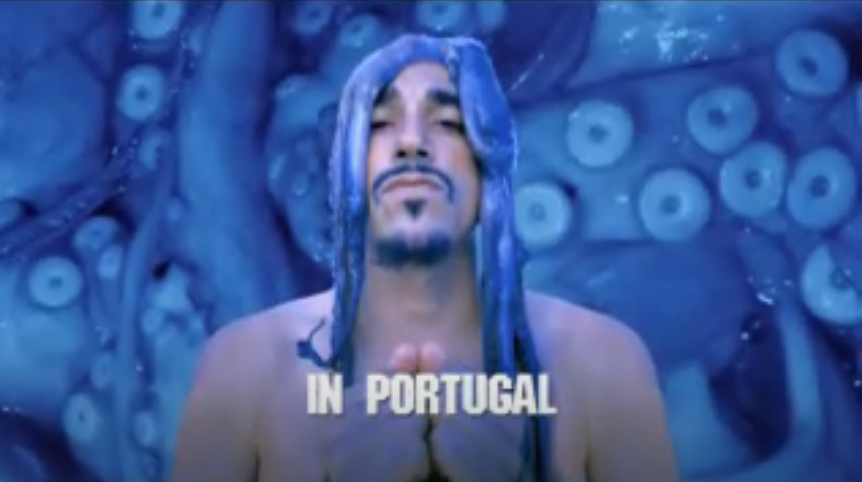
Friday, November 19, 2021

"N PORTUGAL" by Ithaka ft. Thalma de Freitas

N PORTUGAL - Ithaka (ft. Thalma da Freitas)
https://music.apple.com/us/album/salt... ithaka - N PORTUGAL (ft. Thalma da Freitas) [Tito Gomes Rmx] From the album: Saltwater Nomad The video was created. directed and edited by Portuguese graffic artist Nelson Lança (aka NelGod) using primarily still images of the artist and scenes around Portugal creatively animated using a variety of software. An earlier version of the song N PORTUGAL was released on Ithaka's 2004 album RECORDED IN RIO, receiving substantial radio play in Portugal itself. Both mixes feature the background vocal talents of grammy-nominated Brazilian singer, Thalma de Freitas who is aa former member of Rio de Janeiro's Orchestra Imperial band. Publishing administered by North Music Group (USA) #Portugal #NPortugal #Hiphoptuga

Thursday, April 9, 2020

Recorded In Rio - Inner CD sleeve Ithaka (Ithaka Darin Pappas)

Recorded In Rio - Inner CD sleeve Ithaka (Ithaka Darin Pappas) Foto: Self-portrait in Coney Island, New York.

https://music.apple.com/us/album/recorded-in-rio/75433185


https://itunes.apple.com/us/artist/ithaka/69363540
https://store.cdbaby.com/artist/Ithaka2
https://www.instagram.com/_ithaka_/?hl=en
https://www.imdb.com/name/nm5225987/
https://thehundreds.com/blogs/content/ithaka-interview
https://pt.wikipedia.org/wiki/Ithaka


http://upmagazine-tap.com/en/pt_artigos/ithaka-2/

Recorded In Rio - Back Cover Ithaka (Ithaka Darin Pappas)


Recorded In Rio - Back Cover Ithaka (Ithaka Darin Pappas) Foto: Self-portrait in Coney Island, New York.

https://music.apple.com/us/album/recorded-in-rio/75433185

Recorded In Rio, an album by Ithaka (Ithaka Darin Pappas) made in Brazil

Recorded In Rio, an album by Ithaka (Ithaka Darin Pappas) made in Brazil(2004).

https://itunes.apple.com/us/artist/ithaka/69363540
https://store.cdbaby.com/artist/Ithaka2
https://www.instagram.com/_ithaka_/?hl=en
https://www.imdb.com/name/nm5225987/
https://thehundreds.com/blogs/content/ithaka-interview
https://pt.wikipedia.org/wiki/Ithaka


http://upmagazine-tap.com/en/pt_artigos/ithaka-2/

Ithaka Darin Pappas as featured in Surf Story

Surf Artist, Ithaka Darin Pappas as featured in Surf Story


https://itunes.apple.com/us/artist/ithaka/69363540
https://store.cdbaby.com/artist/Ithaka2
https://www.instagram.com/_ithaka_/?hl=en
https://www.imdb.com/name/nm5225987/
https://thehundreds.com/blogs/content/ithaka-interview
https://pt.wikipedia.org/wiki/Ithaka


http://upmagazine-tap.com/en/pt_artigos/ithaka-2/

Wednesday, April 8, 2020

Ithaka Darin Pappas no Jornal Semanário (Portugal 1994)

Ithaka Darin Pappas na revista Quero! - Jornal Semanário (Portugal 1994)


https://itunes.apple.com/us/artist/ithaka/69363540
https://store.cdbaby.com/artist/Ithaka2
https://www.instagram.com/_ithaka_/?hl=en
https://www.imdb.com/name/nm5225987/
https://thehundreds.com/blogs/content/ithaka-interview
https://pt.wikipedia.org/wiki/Ithaka


http://upmagazine-tap.com/en/pt_artigos/ithaka-2/

Ithaka Darin Pappas no ornal Diário de Notícias (Portugal 1998)


Ithaka Darin Pappas no jornal Diário de Notícias (Portugal 1998)


https://itunes.apple.com/us/artist/ithaka/69363540
https://store.cdbaby.com/artist/Ithaka2
https://www.instagram.com/_ithaka_/?hl=en
https://www.imdb.com/name/nm5225987/
https://thehundreds.com/blogs/content/ithaka-interview
https://pt.wikipedia.org/wiki/Ithaka


http://upmagazine-tap.com/en/pt_artigos/ithaka-2/

Monday, April 6, 2020

Ithaka Darin Pappas On Photographing a Bulletproof Vest-Wearing, Skateboarding-Riding Eazy-E

Ithaka Darin Pappas On Photographing a Bulletproof Vest-Wearing, Skateboarding-Riding Eazy-E by Vikki Tobak (originally published in Mass Appeal Magazine January 5th 2017)

We spoke with Ithaka Darin Pappas the photographer behind some of N.W.A’s earliest promo photos about the rarely seen image of Eazy-E skateboarding in Venice Beach while rocking a bulletproof vest…

Venice Beach, California 1989
The image of Eazy-E skateboarding in Venice Beach, wearing a bulletproof vest was never published. Stored away for 25 years and just recently seen for the first time (pictured below in “The Shot”) it’s one of those shots that reveals, in hindsight, a moment in time when LA hip hop was becoming a force and a nascent group of MC’s and producers was crafting their sound and vision. Taken in 1989, shot #27 on the contact sheet, shows Eazy-E born Eric Wright in all his bravado and swagger. The rest of the proof sheet is a deep dive showing members of N.W.A spending the day with Fab Five Freddy for Yo! MTV Raps. Eazy-E died of complications related to AIDS some seven years after these photos were taken, in 1995.

“I think Eazy was wearing the vest for legitimate reasons,” recalls Ithaka. “This was at the height of his fame and Venice was a bit rougher back in those days. Literally anything could have gone down that day. The skateboard wasn’t his own, he’s signed it for someone and I think kind of borrowed it without asking. I wasn’t even sure I should have been using too much film on the shot.”

To capture these moments of candor Ithaka had to be a keen observer of visual intricacies both big and small. “Eazy wasn’t skating as part of the shoot, he was just skating for the fun of it. I’m not even sure he ever knew I took those five or six pictures or not. I’m pretty sure Eazy was signing someone’s skateboard, a longer street board. I’m not sure what brand. He just ended up skating away on it. He was pretty damn good on it too. It happened while Fab Five Freddy was asking Dre and Cube some interview question about 75 yards away, so I wasn’t really sure what to focus on.an hour long episode of Yo! MTV Raps being created about Eazy and N.W.A, hosted by Fab Five Freddy being shot on a number of different days and locations around Los Angeles,” says Ithaka.

The image was shot at a time when Venice was a much seedier than it is today. The locals included plenty of skaters and N.W.A was still to reach the height of popularity. Skateboarding and hip hop cultures were yet to be as closely associated as they are today. As the story goes, it wasn’t until the mid-to-late ’80s that professional skater Natas Kaupas appeared on the cover of Thrasher magazine wearing a Public Enemy t-shirt that the two youth cultures began to run in the same circles.

“Today, it may seem natural that there’s no divide between the two entities, like it’s been that way forever” says Ithaka. “But it wasn’t long ago that the fairly nubile movements were finding themselves. In the ’80s, I was doing all of those things when two burgeoning cultures – skateboarding and hip-hop – found themselves entangled. Both rooted in youth culture.”
Ithaka grew up in Los Angeles where he started shooting skaters while still in high school. His first published images ran in Thrasher Magazine but it wasn’t until he started as a promotional photographer for Priority Records that his photography really went deep into L.A.’s then burgeoning hip hop scene, capturing the first official publicity and album cover shoots for N.W.A. and then Eazy E and Ice Cube as solo artists. With skateboarding culture and photography as a starting point, Ithaka fashioned himself as a renaissance man extending into music, poetry, sculpture and even insect study in Brazil.

Most of Ithaka’s archive images is still on negatives but he has been busy unearthing most of his analogue work as he puts together a photo book of the NWA sessions titled Beyond South Central (1988-1991).

Ithaka Darin Pappas: I look at these pictures and think ‘damn, I lived thru something real.’ At this time, I was the principal freelance photographer working with Priority Records and was capturing almost all of the in-house Eazy-E and NWA images. I shot a few of the vinyl covers but I mostly documented their video shoots, autograph sessions, press conferences, etc and tried to get a few decent portraits along the way to use for publicity pictures and images that the label could give to magazines as complete editorials. I think I probably worked with that crew at least 18-20 times. It was almost a student-photography/intern situation. Priority basically paid film and processing, they were very cheap for how much money they were making. I could have probably cut corners and shot less film and pocketed a few nickels, but rarely did. I was in it for the pictures. I was a photo junkie.

I experienced and photographed a special period of time in a special place. There was an undeniable freedom of that pre-digital period. I’m really happy to have known the world before personal computer overuse and instant communication. There was more time just to contemplate things and to conversate with friends, take pictures, bump music, smoke weed, surf, skate and just be young in general. I loved going to the photo labs in Hollywood and seemed to know everybody at all of them. For me, everyday seemed like an adventure at that time.

It was also a period of awakening that everyone starting becoming more aware of each other. For one of the richest places in the world, LA certainly wasn’t as shiny as you’d think under the surface. Before Eazy-E and NWA and other influential hip hop projects from that period, people in Hollywood and the burbs, Orange County and beyond literally had no idea what deep urban Los Angeles was all about and probably had no interest in knowing. But suddenly, love it or hate it, there it was in their faces to the point that kids from affluent zones really started emulating it all. I’m not even sure how people from the hood felt about kids in Beverly Hills walking their walk, talking their talk and sometimes packing guns, but it sure as hell happened. And at the very least there was an almost instant awareness of a whole different Los Angeles originating south of Pico Boulevard that many people had either been ignorant to it existing or were choosing to ignore its reality. But now it was impossible to turn a blind eye.

The Shot
I think Eazy-E was a marketing genius on so many levels. He never gave much room for people to reinterpret who he was. He presented himself the exact way that he wanted and exactly who he was visually. There was never a stylist on any Eazy shoot. He brought what he wanted to wear, even had things made sometimes. He made the shoot what it was. Eazy was always cool. Extremely bright and usually funny as hell, but could also go quiet and introverted at times. He was someone most people liked immediately. He had real star quality, cool-as-shyt style and was ridiculously photogenic. It was pretty hard to take a bad picture of him.

The Camera Nerd Out
Generally speaking, for these shoots, I had a couple of 35mm Nikon FE2s that I would use. I’d have color film in one and black and white in the other. For black and white, I almost always used Ilford HP4 (400 ISO) or Kodak Tri-X (400 ISO). These films are so versatile, even the mistakes look like artistic choices, very useful for backlit natural light images.


And sometimes I’d use an old Yashica Mat 124 that had belonged to my grandfather who used it to survey bridges he had helped engineer in Tennessee and Georgia in the 50’s-60s. I still have that camera. It has some weird distortions that give it a unique look, I love it.

These images in Venice were all taken on one of my Nikon cameras. I had a small flash unit on it, but just used it a couple of times that day — for a some of the portraits and one or two of the shots of easy skateboarding.


The Q+A
Talk about the intersection of skateboarding culture and hip hop at this time. Was there a connection in LA at the time this photo was taken?

New York hip hop was migrating west while California-born modern skateboarding was moving east. Some people say Natas Kaupas wearing a Public Enemy shirt on the cover of Thrasher signified the birth of a union between the two cultures, but it certainly wasn’t something I noticed right away. California skateboarding still seem firmly embedded in punk.

Although, I personally come from a Southern Californian surf-skate background, I never completely bonded with punk rock too much, but was very into hip hop since I first heard Sugar Hill Gang in the eighth grade. Hip hop was my first musical obsession.


I lived in the South Bay, so I can’t really comment accurately about Venice and Santa Monica. I don’t really remember any skaters that I knew personally, listening to hip hop at that time. Most people certainly thought I was odd. I remember one skater I knew responding after me telling him I’d just shot the cover of We Want Eazy..instead of being stoked for me, he said, “Well, it’s questionable if that can even be considered music.”

That day in Venice was a shock, because I’d been photographing NWA sporadically at least 16 months and of the hundreds of conversations I’d overheard with them, not one of them was ever related to skateboarding. I think once I suggested taking everyone surfing at some point…and they just kind of laughed it off. I’m not sure at what point hip hop and skateboarding truly fused in California, but this seemed way before that.


Was Fab Five Freddy there to film Yo! MTV Raps? What do you recall of the other folks in the shots?

Yep. The shots in Venice were from the morning and early afternoon of February 24th 1989. It was a typical cool, but sunny southern California winter day. Priority has sent me to document it all. If I remember correctly there was an hour long episode of Yo! MTV Raps being created about Eazy and NWA, hosted by Fab Five Freddy being shot on a number of different days and locations around Los Angeles. I went to at least one other day of shooting a couple of weeks later at MacArthur Park near downtown LA, where we also shot the cover of the Straight Outta Compton /Express Yourself remix 12″ during the same session.

In Venice that day, there was a general interview with NWA by Fab Five Freddy. The D.O.C. and Above the Law also came down. There was a on-set visit from Kris Kross, who were obviously massive fans of the group. They participated in the interview, but they didn’t stay too long, it was a week day and although they were big stars, I think they had to go back to school.


After that, there was a walk-thru of the Venice Boardwalk, with occasional stops for interview segments and pictures. People were tripping that the boys were there in the flesh and blood. They were signing autographs the entire time. When we got down by the skateboard area Eazy starting talking to some of the skaters and I shot a few pictures of him with the local crew. The now great photographer, Josh Bagel Glassman, was one of the kids in the group shot with Eazy. I somehow remember Gator Rogowski being there as well, but can’t find him in any of the pictures.

In general, what was your relationship to your photography subjects?

I was mostly an observer, a fly on the wall. This was their moment and I knew this and they sure as hell knew it.

At this particular point early in my career I was photographing skateboarding and young Hollywood actors for teeny bop kind of mags. I started working with Priority Records when a neighbor of mine who worked there suggested I show my book to the art department.

I’ve never been a star-struck person at all, but instead someone who respects greatness in all avenues of the arts and knows how hard it is just to get there. But I’d been following Eazy’s music since Gangsta Gangsta first starting popping on KDAY am. I was a fan for sure. So when my first shoot with Priority happened I went overboard on the shoot. I think they gave me a total budget of only $500 for film etc including my pay and I spent much more than that just because I wanted to do a kick-ass job.

And from that first November 1988 session, The Miracle Mile shot appeared. Made in my old apartment on Orange Street, LA – it’s probably the only quality, existing, well-lit shot of Eazy, Cube, Dre, Ren & Yella without sunglasses, all looking at the camera. There really aren’t many images of them all together as a group. That picture was the main backdrop of their entire segment of the Rock N Roll Hall Of Fame induction ceremony in Brooklyn last spring and has been in Rolling Stone and will be in the new documentary The Defiant Ones (HBO).


As a photographer, this period, 1988-1991, is still a huge career highlight for me. I saw Dre some months ago at an editing facility a friend of mine owns. It was probably the first time I have seen him since 1991. I’ve lived in five different countries since then. He was super cordial, but it took him a while to place the face with the pictures. Then there seemed to be a time-travel kind of understanding and he gave me a hug. The passage of time is a bizarre phenomena. Crazy to think the first time I met all of them, they were rolling up to my scrappy apartment in a Safari van.

How closely are your life and art are entwined?

Very intertwined. My philosophy is not to try too hard on what you create, but instead make life choices and the art, lyrics, photos whatever you are doing will follow automatically.


Before I listened to hip hop, I read a lot of beat generation authors. Their first-person narrative really intrigued me, it all felt very real and I felt a bond with those writers. I felt that I knew them in a way. Obviously, there was just a bit of distance because they were writing about cities I didn’t know well and about periods of time that happened before I was born.

But when I first started shooting Eazy and N.W.A, it was kind of a revelation because these were today’s first-person narrative story-tellers, living it. I knew a lot of their music already and although it wasn’t my own reality, I was close enough to the source to realize just how real it all was, how authentic they were. These were, for the most part, real stories from real streets with real consequences. And after I met them, I realized just how concrete it all really was. I think it changed me in a way.


What was the process of looking at the contact sheet like? Was there an obvious stand-out shot?

Crazily, I remember well Eazy skateboarding and remembered taking his picture, but had not looked at these photos for 25 years until some ultra high-resolution scans of these early proofs were made last year for the use in an upcoming HBO documentary. Even then I had not really gone through them until some months later. I was magnifying them on the computer and damn there they were again. Eazy skating!

I complain a lot about digital photography, but one thing different about those days
Was you were forced to show your outtakes. So it might make you question taking an obviously bad pictures, or if you weren’t well-focused. I’m not even sure I ever showed that roll of film to the label, because they were so many poorly focused images on the same batch.


How does this photo compare to some of your other artistic work?

I try to bring creativity into any job I am doing, but this was definitely
me trying to document someone else’s life and career. It’s a separate mode. As a photographer, if you are working with another artist or musician, the image should mostly reflect what they’re about.

Tell us about your career at the time this photo was taken. What artists and photographers inspired you early on?


I’ve been shooting photographs actively since I was five years old. My father was into photography as a hobby and had all kinds of old cameras and darkroom gear. So in the beginning it was something we’d kind of did together for a few years. We had the equipment, but for some reason we’d go to the rental darkrooms.

More than anything at that time, I was into surfing, still am. Hip hop was big in my world. Skating and visual art. I never even had to think about photography as an external interest. It ‘s second nature to me. It’s my hobby and has been a career. And continues to be both of those things. I shoot people for free, sometimes for big bucks, and for my exhibits and love it all the equally. Mostly it’s just for myself. There have been years I’ve been so focused on sculptures or music that I didn’t do a single photo job, but still shot almost daily. It’s an extension of my mind and body and integrates into all aspects of my life.


What do you shoot on now? Do you still make contact sheets? What percentage do you think you shoot film vs. digital?

I have spent much of the last ten years in the Atlantic Rainforest in south-eastern Brazil where I have a small jungle property. Wildlife, specifically insects, have dominated my work this last decade. I photograph insects turn them into flat art pieces and sometimes base large scale sculptures made from recycled surfboards on these images.

Sometimes I’ll shoot 2 ¼ square format on my old Yashica. But, I’m mostly shooting the actual images on digital. I like the small stuff, point and shoot style disposable cameras, but I often manipulate the images after they are printed. I used to love getting crazy in the dark room, like pouring milk on a picture when the developer chemical was working. I like hand made things. So I try to put manual processes into these newer images, but usually in post production. Drawing on them, nailing them to wood, coating them with resin etc.

What do you miss about early analog photography and the contact sheet/dark room process?


I miss the beginning and end of a shoot. Having a limited quantity of film forces you to choreograph things a little differently. Most people today overshoot the hell out of everything until they get the shot. A roll of film at that time was similar to the way musicians used to have real albums. There was more of a sense of completion, like you wanted the whole shoot to be a work of art. Not just a one-hit iTunes wonder and the rest to be discarded.


Tuesday, March 17, 2020

Ithaka Darin Pappas é um músico e artista californiano


O músico, artista plástico, escritor, fotógrafo e surfista, Ithaka, começou a fotografar regularmente com apenas cinco anos – publicou sua primeira foto com 17. Por alguns anos, sustentou-se inteiramente com a fotografia, mas depois passou a desviar suas atenções para outras áreas de expressão, como escultura e música, apesar de a fotografia nunca ter saído de sua minha vida. A fotografia apenas se incorporou nessas outras atividades. “Um dos maiores projetos da minha vida tem sido a contínua série de esculturas The Reincarnation Of A Surfboard. São esculturas contemporâneas criadas exclusivamente a partir de pranchas de surf recicladas”, diz o californiano. Ithaka conta também que a fotografia sempre continuou ao lado desse trabalho, como parte das exposições. Mas, como afirma, “não apenas para mostrar como são as esculturas, e sim como um trabalho separado”. Ele vive no Brasil atualmente, onde gravou seu últimos dois álbuns, Recorded In Rio e Saltwater Nomad.

Já visitou e surfou ondas na Grécia, Marrocos, Quênia, Tanzânia, Cabo Verde, Indonésia, Nova Zelândia, México, Austrália e Peru. Sua viagem mais recente foi ao litoral grego, em março passado, quando teve a oportunidade de encontrar boas ondas no mar Mediterrâneo. “Morei lá anos atrás, mas não havia surfado. Desta vez, com a ajuda da tecnologia, peguei altas ondas, além de descobrir diversos surf spots. A Grécia possui três mil ilhas, tem muitas possibilidades, com um litoral recortado e fundos bons. Foi engraçado encontrar ondas na terra dos meus avós”, diz.

Multifacetado, multiartista, polivalente são várias as definições encontradas para este artista extremamente original, que norteia sua vida no prazer que sente no contato com o oceano. Para ele, uma boa definição para si é a de comunicador áudio-visual – que vive simplesmente para criar e comunicar. A mensagem transmitida em sua obra pode ser facilmente captada ao observar seu estilo de vida.

Ithaka passeia com muita desenvoltura e fluidez por mais quatro vertentes da arte: a música, a fotografia, a escrita e a arte contemporânea por intermédio de suas esculturas. Em sua carreira musical lançou cinco CDs solos de hip hop alternativo, com letras que não se limitam ao “batido” universo gangsta, além de ter participado de projetos musicais de artistas diferenciados.

Versos baseados em suas experiências, cantados por sua voz imponente, faz de Ithaka um músico premiado, com sucessos incluídos em filmes de surfe até produções hollywoodianas. Marcou presença na trilha sonora de “Second Thoughts”, de Timmy Turner, e Samba Trance & Rock n’ Roll, do premiado videomaker brasileiro Rafael Mellin. Sua canção “Escape from the City of Angels” embalou um filme considerado sucesso em Hollywood, “Replacement Killers” (Assassinos Substitutos).

A influência do surfe em sua música é notório. Em um de seus álbuns, intitulado “Stellafly”, a canção “Seabra is mad” homenageia a coragem do big rider português José Seabra, que ao seu lado protagonizou uma histórica sessão na ilha da Madeira no inverno de 95, botando para baixo em ondas de 15 pés plus na remada.

Ithaka começou a surfar aos 12 anos no Havaí, quando passava férias com um amigo em Maui. “Pescava em um barco no canal de Honolua Bay, quando vi caras pegando tubos. Eram as imagens das revistas. Na hora pensei, tenho que fazer isso!!”, recorda.

Aos 16 anos, pintava elementos do mar em qualquer coisa que via pela frente. Seis anos depois, após encontrar uma prancha sua quebrada, resolveu pintá-la e alterou completamente sua forma utilizando um serrote. “A partir daí, nunca mais pintei numa tela ou peça de madeira. As pranchas personalizaram minha arte”. Desde então, usa ferramentas simples como serrote e lixa, tinta acrílica e pó de madrepérola para transformar shapes em obras de arte. “Experimento materiais e tenho meus segredos. Mas, o primeiro passo sempre é consertar a prancha e prepará-la para receber os produtos”.

Reconhecido internacionalmente, já transformou mais de 200 pranchas. Ithaka participou de exposições na Europa, Brasil, Japão e Estados Unidos e acaba de lançar a série “Jurema”, produzida sob forte influência da flora brasileira, em que mistura aos blocos, galhos quebrados e sementes. “Deixei a forma da prancha natural e usei detalhes orgânicos. É uma série baseada na natureza”, especifica.

Leitor assíduo de escritores como Charles Bukowski pegou gosto pela escrita quando estava em Lisboa, Portugal, no chuvoso inverno de 92 sem pranchas (presas por cerca de dois meses na alfândega). Suas histórias de surfe com ficção foram publicadas em diversas revistas ao redor do mundo, como a coluna “Fishdaddy Chronicles”, na Water, além de crônicas nas revistas Surfer, The Surfer's Journal, Surf, OnFire, Fluir e Surf Portugal. Fez também reportagens sobre os diferentes lugares por onde passou. “Antes de tudo, sou um contador de histórias. Minha música mostra isso e os meus artigos também”.

Na fotografia, acumula imenso material de surf trips e trabalhou, no fim dos anos 80, fotografando grandes nomes no hip hop mundial, como N.W.A, grupo mítico de Los Angeles que juntou Ice Cube, Dr. Dre, MC Ren e Eazy E.

As habilidades deste artista polivalente são totalmente interligadas pelo mar. “Estou envolvido com todas da mesma forma. Nunca tive uma verdadeira razão para escolher uma ao invés da outra. Estas múltiplas facetas me definem não como artista, mas como ser humano”, explica.

“Não é todo meu trabalho que tem uma mensagem. Mas, o que tento dizer é para não se viver a vida da maneira como pessoas de fora (de sua vida) julgam normais. Não existe normal. Viva sua maneira de viver. Experimente todas as possibilidades e seja o mais feliz possível. Não tenha medo de sentir dor. Ela também faz parte da jornada. Não tenha pressa para alcançar seus objetivos financeiros. Ande devagar, explore as ‘ruas pequenas’, cheire as flores e, principalmente conheça a si mesmo”.

Entre seus projetos lançados recentemente ele destaca a publicação da crônica “Milagre em Malibu” no livro Surf Story, lançado no fim do ano passado nos EUA.